
Robert Garner, DO1; Collin Erickson, DO1; Jason Webb, DO2; Paul Doney, OMS-II1; Kayla De Leon, OMS-II1; Charles Orth, DO FAOAO1
1Kansas City University/HCA Midwest
2University of Arkansas Medical Sciences Northwest
Prior presentations: None.
Financial support: None.
Financial interests: The authors have declared no financial interests.
Conflicts of interest: The authors have declared no conflicts of interest.
Disclaimer: This research was supported (in whole or in part) by HCA Healthcare and/or an HCA Healthcare affiliated entity. The views expressed in this publication represent those of the author(s) and do not necessarily represent the official views of HCA Healthcare or any of its affiliated entities.
AI use disclaimer: None.
Abstract
Background
Rates of total knee arthroplasty (TKA) in the United States exceed 800,000 annually and are projected to surpass 1.2 million by 2040. The reported infection rate following primary TKA was approximately 2% in 2023 . Above-knee amputation (AKA) is considered a terminal salvage procedure for failed TKA refractory to other treatments. Historical data from 1970–2000 reported an AKA rate of 0.36% following TKA. This study aimed to evaluate whether the rate of AKA per primary TKA has changed in a contemporary cohort.
Methods
A retrospective study was conducted using the HCA Midwest Health System database to identify patients treated between 2016 and 2022 who underwent AKA (CPT 27590). ICD-10 codes were used to evaluate comorbidities, body mass index (BMI), demographic characteristics, and microbiologic data. Primary TKA cases were identified using CPT 27447, and operative reports were reviewed to confirm the indication for amputation. Associations between comorbidities and progression to AKA were evaluated using independent t-tests and chi-square analyses.
Results
A total of 360 AKA cases were identified, of which 255 met inclusion criteria after exclusions. Thirty AKAs were attributable to failed TKA, including prosthetic joint infection (PJI) and arthrofibrosis. During the study period, 9,900 primary TKAs were performed. The incidence of AKA following primary TKA was 0.29% (29/9,900 No statistically significant associations were identified; however, the study was underpowered to detect modest differences because of the small number of events.).
Conclusion
The incidence of AKA per primary TKA remains comparable to historical reports. Above-knee amputation represents a rare but catastrophic salvage outcome following failed TKA. Continued surveillance of this outcome and other severe complications is warranted given evolving surgical techniques, implant technology, and increasing procedural volume.
Keywords: Total knee arthroplasty, Above-knee amputation, Prosthetic joint infection, Arthroplasty complications, Amputation Risk
Introduction
Total knee arthroplasty (TKA) is one of the most common orthopedic procedures performed in the United States today (1). Despite a recent 2025 study finding patient satisfaction ~90% after TKA (2) and durable implant survival, complications remain an inherent risk and must be addressed during preoperative counseling. Common complications of TKA include bleeding, wound complications, thromboembolic disease, and infection (3). Current literature estimates that approximately 800,000 TKAs are performed annually in the United States, with projections exceeding 1.2 million by 2040 (4). This sustained growth underscores the importance of continued surveillance of postoperative outcomes. Postoperative TKA complications are managed through preventive measures, early recognition, and timely surgical intervention, ranging from conservative wound care to complex revision arthroplasty (5).
Above-knee amputation (AKA) is a rare yet devastating complication following TKA. The most common etiologies include prosthetic joint infection (PJI), implant failure, and periprosthetic fracture (6). Despite ongoing improvements in surgical technique and perioperative management, implant technology, perioperative optimization, periprosthetic joint infection remains a serious complication of primary TKA with reported rates remaining approximately 2% over the past two decades , with limited reduction (7). The indication for AKA typically represents a terminal salvage procedure following prolonged antibiotic therapy and multiple revision procedures (8). Contemporary studies have demonstrated declining rates of amputation over time; however, patients undergoing revision for PJI continue to face a measurable risk of progression to limb loss despite modern limb-salvage strategies (19,20). The reasons for this persistent rate are not fully understood. One hypothesis implicates the increasing prevalence of chronic comorbid conditions that impair wound healing and predispose patients to infection.
The rising prevalence of metabolic and cardiovascular comorbidities may contribute to persistent severe complication rates following TKA. Conditions such as diabetes mellitus, obesity, and smoking have been shown to impair immune function, increase inflammation and mechanical stress on soft tissues, as well as impair vascularity and wound healing (9-11). Chronic Obstructive Pulmonary Disease (COPD), coronary artery disease, and other cardiovascular systemic diseases contribute to systemic hypoxia, stress, and have been associated with increased perioperative morbidity and readmission risk (12-15). Although these conditions are establishing risk factors for PJI and wound complications, their cumulative contribution to progression toward AKA remains unclear. The stable incidence of AKA may represent a plateau phenomenon—an “persistent baseline risk” despite evolving techniques. We present a modern retrospective study aimed at evaluating the rate of AKA per primary TKA in a large Midwestern hospital system between 2016 and 2022 and assessing associations with patient-level comorbidities. We hypothesized that the contemporary incidence of AKA following TKA would be lower compared to historical reports due to preceived advances in arthroplasty care.
Materials and Methods
A retrospective review was conducted using the HCA Midwest Health System database between January 1, 2016, and December 31, 2022. Patients who underwent AKA were identified using CPT 27590, and primary TKA cases were identified using CPT 27447 codes. Operative reports were reviewed by orthopedic surgery residents to confirm indications and excluded trauma-, malignancy-, and vascular-related amputations.
Adults above the age of 18 with a history of total knee arthroplasty on the ipsilateral leg undergoing subsequent AKA were included within the study. AKA’s indicated for trauma, malignancy, lower extremity infections not including the TKA, and primary vascular etiologies were excluded from the study. Demographic information (age, sex, BMI), comorbidities (e.g., diabetes, cornary artery disease (CAD), chronic kidney disease (CKD), obesity, smoking), and microbiological findings were extracted using ICD-10 codes. The year of surgery was recorded to assess temporal trends. Operative reports were obtained using CPT codes and deidentified by HCA data analysts.
Descriptive statistics were calculated for demographic and clinical variables. The incidence of AKA per TKA was defined as: Rate of AKA per TKA (%) = (Number of AKA after TKA)/(Total Primary TKA) × 100, as described by Sierra et al (21). Comparisons between categorical variables were performed using chi-square tests, and continuous variables using independent t-tests. Statistical significance was set at p < 0.05. All analyses were performed using IBM SPSS Statistics for Windows, Version 29.0 (IBM Corp., Armonk, NY).
Institutional Review Board approval was obtained with exemption granted due to the retrospective, deidentified nature of the study. This study was conducted in accordance with HCA institutional and Journal of the American Osteopathic Academy of Orthopedics (JAOAO) ethical standards and did not receive any specific grant from funding agencies in the public, commercial, or not-for-profit sectors.
Results
A total of 360 AKA cases were identified during the study period. After application of exclusion criteria, 105 cases were excluded, resulting in a final cohort of 255 patients. Of these cases, 29 were attributed to failed TKA. During the same period, 9,900 primary TKAs were performed, yielding an incidence of 0.29% (29/9,900) for AKA following TKA. None of the 29 AKA related to failed TKA were from the cohort of patients who received a primary TKA during the study period.
The predominant indication for AKA after failed TKA was prosthetic joint infection (PJI), accounting for 28/29 cases, followed by arthrofibrosis 1/29 cases. (Figure 1).
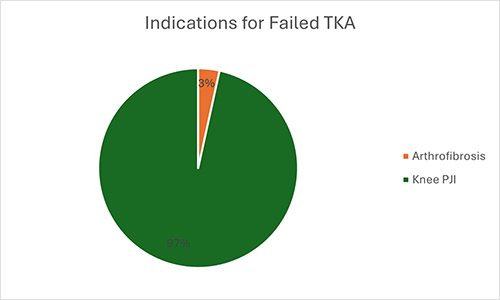
Figure 1: Distribution of primary indications for AKA among patients with failed TKA within the study cohort.
Among patients who progressed to AKA after TKA, t most patients werewere White (>90%) and female (>60%).
Evaluation of medical comorbidities—including diabetes mellitus, hypertension, hyperlipidemia, , and other cardiometabolic conditions—did not demonstrate a statistically significant association with progression to AKA, however, CAD and CKD were less prevalent within this cohort. (Figure 2). In infection-related cases, Staphylococcus aureus was the most frequently isolated organism.
| Comorbidity | Not Failed (n=189) |
Failed (n=30) |
OR (95% CI) | P value |
| Diabetes mellitus | 102 (54.0) | 12 (40.0) | 0.57 (0.25–1.29) | 0.172 |
| Peripheral vascular disease | 30 (15.9) | 1 (3.3) | 0.18 (0.02–1.38) | 0.089 |
| Congestive heart failure | 59 (31.2) | 7 (23.3) | 0.67 (0.27–1.66) | 0.521 |
| Hypertension | 156 (82.5) | 26 (86.7) | 1.38 (0.44–4.38) | 0.794 |
| Obstructive sleep apnea | 17 (9.0) | 6 (20.0) | 2.53 (0.88–7.22) | 0.101 |
| Hyperlipidemia | 109 (57.7) | 20 (66.7) | 1.47 (0.66–3.31) | 0.426 |
| Coronary artery disease | 76 (40.2) | 5 (16.7) | 0.30 (0.11–0.84) | 0.014 |
| Chronic kidney disease | 109 (57.7) | 4 (13.3) | 0.11 (0.04–0.34) | <0.001 |
| COPD | 43 (22.8) | 4 (13.3) | 0.52 (0.17–1.61) | 0.339 |
| Liver disease | 10 (5.3) | 2 (6.7) | 1.28 (0.26–6.28) | 0.672 |
| Metastatic cancer | 4 (2.1) | 0 (0.0) | 0.65 (0.03–12.81) | 1.000 |
| Chronic corticosteroid use | 6 (3.2) | 1 (3.3) | 1.05 (0.12–9.18) | 1.000 |
| Alcohol use | 11 (5.8) | 1 (3.3) | 0.56 (0.07–4.49) | 1.000 |
Figure 2: Comparison of patient comorbidities between patients with and without failed total knee arthroplasty
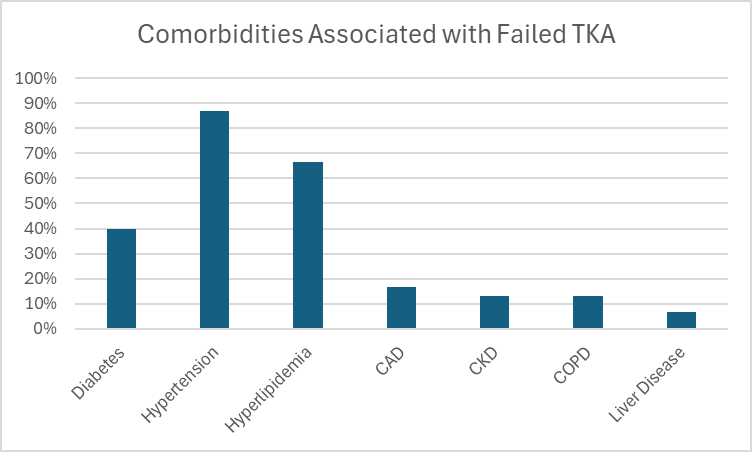
Figure 3: Distribution of major medical comorbidities identified within the cohort of patients progressing to AKA after failed TKA, including diabetes mellitus, hypertension, hyperlipidemia, coronary artery disease, and other cardiometabolic conditions evaluated in the study.
Discussion
The incidence of AKA following primary TKA was 0.29% in this contemporary cohort. PJI accounted for the vast majority of cases, while noninfectious etiologies were rare including one case of arthrofibrosis. No evaluated comorbidity was independently associated with progression to amputation.
Despite advancements in surgical technique and perioperative optimization, our study reflects that the incidence of AKA per TKA has remained relatively unchanged over several decades. Several mechanisms may contribute to this persistent residual risk. Most notably, the increasing prevalence of chronic metabolic disease in the surgical population likely offset improvements in technique (9-15). However, conditions such as diabetes, obesity, cardiovascular disease, chronic kidney disease, and pulmonary disease are associated with systemic inflammation, impaired wound healing, and immune dysfunction,did not correlate with obtaining an AKA for failed TKA in this study.
PJI accounted for the overwhelming majority of amputations following TKA in our cohort, consistent with prior literature identifying infection as the leading cause of catastrophic failure after TKA. Despite advances in revision arthroplasty, recent multicenter data have demonstrated high failure rates following repeat two-stage revision for chronic periprosthetic joint infection, with a subset of patients ultimately progressing to AKA despite multiple limb-salvage attempts (16). Large database studies further demonstrate that, although the incidence of salvage procedures such as above-knee amputation and arthrodesis has declined over time, a measurable proportion of patients undergoing infection-related revision TKA still progress to these endpoints, particularly in the setting of recurrent infection and multiple revision attempts (19). This underscores the persistent biological limitations of infection eradication and provides important context for the stable incidence of AKA observed following TKA, despite ongoing improvements in surgical technique and perioperative care. Our results align closely with prior reports evaluating amputation after failing TKA. Historical studies have reported rates of approximately 0.36% between 1970 and 2000, with infection identified as the predominant cause. The similarity between historical and contemporary rates suggests that while mechanical failures have decreased, biologic complications—particularly deep infection—continue to pose a persistent threat. Our study reinforces the concept that AKA after TKA represents a rare but stable complication across decades of evolving surgical practice. Though a rare complication, clinicians should consider discussing the risk of AKA with patients should infection or other imponderable complication occur.
Arthrofibrosis was identified as the indication for above-knee amputation in one patient. The patient initially underwent a primary total knee arthroplasty, which was complicated by a patellar tendon injury. She subsequently developed arthrofibrosis and underwent revision TKA with conversion to a hinged prosthesis. Following the revision, she developed recurrent arthrofibrosis and underwent manipulation under anesthesia (MUA), during which a partial avulsion of the patellar tendon from the tibial tubercle occurred. She was subsequently immobilized in a knee brace and again developed arthrofibrosis associated with chronic pain and severely restricted range of motion (0°–10°). Given her persistent pain and profound functional limitations despite multiple surgical interventions, she elected to undergo an above-knee amputation.Although uncommon, AKA following TKA represents a catastrophic outcome with profound functional consequences. These findings underscore the importance of early identification and aggressive management of PJI, as well as rigorous preoperative optimization of modifiable risk factors such as glycemic control, smoking cessation, and weight management. As national TKA volumes continue to rise, ongoing institutional surveillance of severe complications remains essential to maintaining quality of care.
This study has several limitations. Its retrospective design limits causal inference, and reliance on CPT and ICD-10 coding introduces potential misclassification bias. Variability in electronic medical record systems between institutions where the index TKA, revision TKA, other procedures such as MUAs, and subsequent AKA were performed may have resulted in incomplete documentation. Additionally, the analysis was confined to a single regional hospital system, which may limit generalizability. The relatively small number of AKA cases also limits statistical power for detecting associations with individual comorbidities, our study analysis demonstrates CAD and CKD were less prevalent within this cohort; however, these findings likely reflect sampling variability rather than a protective effect.. However, the large denominator of primary TKA procedures strengthens the epidemiologic validity of the reported incidence. Patient-related factors, including comorbid conditions such as obesity and diabetes, are known to influence the risk of PJI and outcomes following arthroplasty. As these factors may vary across geographic regions, the observed rate of progression to AKA may be influenced by the underlying health characteristics of the study population (18).
Future investigations should incorporate multi-institutional datasets or national arthroplasty registries to validate these findings across broader populations. Further research focusing on risk stratification models and targeted interventions for high-risk patients may help reduce the need for limb-threatening salvage procedures following TKA. The timeline of additional procedures leading to the AKA would be beneficial.
Conclusion
In summary, the incidence of above-knee amputation following failed total knee arthroplasty in this Midwestern cohort was approximately 0.29%, consistent with historical clinical data. Prosthetic joint infection remains the primary indication for this outcome. Despite advancements in surgical technique and perioperative care, a persistent baseline risk of limb-threatening complications remains, emphasizing the need for continued vigilance in infection prevention and patient optimization for total joint arthroplasty.
References
- Maradit Kremers H, Larson DR, Crowson CS, et al. Prevalence of total hip and knee replacement in the United States. J Bone Joint Surg Am. 2015;97(17):1386-1397. doi:10.2106/JBJS.N.01141
- Singh M, Harary J, Schilling PL, Moschetti WE. Patient Satisfaction Is Nearly 90% After Total Knee Arthroplasty; We Are Better Than We Were. J Arthroplasty. 2025;40(6):1521-1525.e1. doi:10.1016/j.arth.2024.11.038
- Kurtz S, Ong K, Lau E, et al. Projections of primary and revision hip and knee arthroplasty in the United States from 2005 to 2030. J Bone Joint Surg Am. 2007;89(4):780-785.
- Sharma V, Morgan PM, Cheng EY. Complications of total knee arthroplasty. Curr Orthop Pract. 2011;22(3):203-209.
- Simons MJ, Amin N, Scuderi GR. Acute wound complications after total knee arthroplasty: prevention and management. J Am Acad Orthop Surg. 2017;25(8):547-555. doi:10.5435/JAAOS-D-15-00402
- Postler A, Lützner C, Beyer F, et al. Analysis of total knee arthroplasty revision causes. BMC Musculoskelet Disord. 2018;19(1):55. doi:10.1186/s12891-018-1977-y
- Weinstein EJ, Stephens-Shields AJ, Newcomb CW, et al. Incidence, Microbiological Studies, and Factors Associated With Prosthetic Joint Infection After Total Knee Arthroplasty. JAMA Netw Open. 2023;6(10):e2340457. doi:10.1001/jamanetworkopen.2023.40457Tande AJ, Patel R. Prosthetic joint infection. Clin Microbiol Rev. 2014;27(2):302-345. doi:10.1128/CMR.00111-13
- Jämsen E, et al. Risk factors for infection after knee arthroplasty: a register-based analysis of 43,149 cases. Acta Orthop. 2010;81(4):413-418.
- Wu C, et al. Risk factors for periprosthetic joint infection after total knee arthroplasty: a systematic review and meta-analysis. Ann Transl Med. 2015;3(17):240.
- Bedard NA, et al. Smoking and total joint arthroplasty: infection risk and outcomes. Arthroplasty Today. 2020;6(4):869-874.
- Zhao H, et al. Chronic obstructive pulmonary disease increases complications following total joint arthroplasty: a systematic review. J Orthop Surg Res. 2022;17(1):468.
- Aghdasi B, et al. Coronary artery disease and outcomes following total joint arthroplasty. Arthroplasty Today. 2023;9:1178-1185.
- Singh JA, et al. Congestive heart failure and outcomes after total knee arthroplasty. J Arthroplasty. 2018;33(8):2542-2548.
- Berbari EF, et al. Risk factors for periprosthetic joint infection: case-control study. J Arthroplasty. 2017;32(12):3774-3781.
- Kennedy IW, Howard LC, Somerville L, Masri BA, Garbuz DS, Vasarhelyi E, Neufeld ME. High failure rates following repeat two-stage revision for chronic knee periprosthetic joint infection: a multicenter study. J Arthroplasty. 2026. doi:10.1016/j.arth.2026.01.057
- Hales CM, Carroll MD, Fryar CD, Ogden CL. Prevalence of Obesity and Severe Obesity Among Adults: United States, 2017-2018. NCHS Data Brief. 2020 Feb;(360):1-8. PMID: 32487284.
- Son, Min-Sun PhD1, a; Lau, Edmund MS1; Parvizi, Javad MD2; Mont, Michael A. MD3; Bozic, Kevin J. MD, MBA4; Kurtz, Steven PhD5. What Are the Frequency, Associated Factors, and Mortality of Amputation and Arthrodesis After a Failed Infected TKA?. Clinical Orthopaedics and Related Research 475(12):p 2905-2913, December 2017. | DOI: 10.1007/s11999-017-5285-x
- Mousavian A, Sabzevari S, Ghiasi S, Shahpari O, Razi A, Ebrahimpour A, Ebrahimzadeh MH. Amputation as a Complication after Total Knee Replacement, is it a Real Concern to be Discussed?: A Systematic Review. Arch Bone Jt Surg. 2021 Jan;9(1):9-21. doi: 10.22038/abjs.2020.53892.2692. PMID: 33778111; PMCID: PMC7957107.
- Sierra RJ, Trousdale RT, Pagnano MW. Above-the-knee amputation after a total knee replacement: prevalence, etiology, and functional outcome. J Bone Joint Surg Am. 2003 Jun;85(6):1000-4. doi: 10.2106/00004623-200306000-00003. PMID: 12783994.