1Baur A, 2Lemons W, 2Protzuk O, 2Goodloe J
1Liberty University, Virginia Beach, VA, United states; 2Virginia Commonwealth University, Richmond, VA, United states
Background
Optimal timing for surgery following acute rotator cuff tears remains unclear, particularly in younger patients. This systematic review examines functional outcomes of arthroscopic repair in patients under 50 compared to those 50 and older, focusing on pain, retear rates, and clinical efficacy. We hypothesize that younger patients benefit more from early repair, with improved function and lower retear rates.
Methods
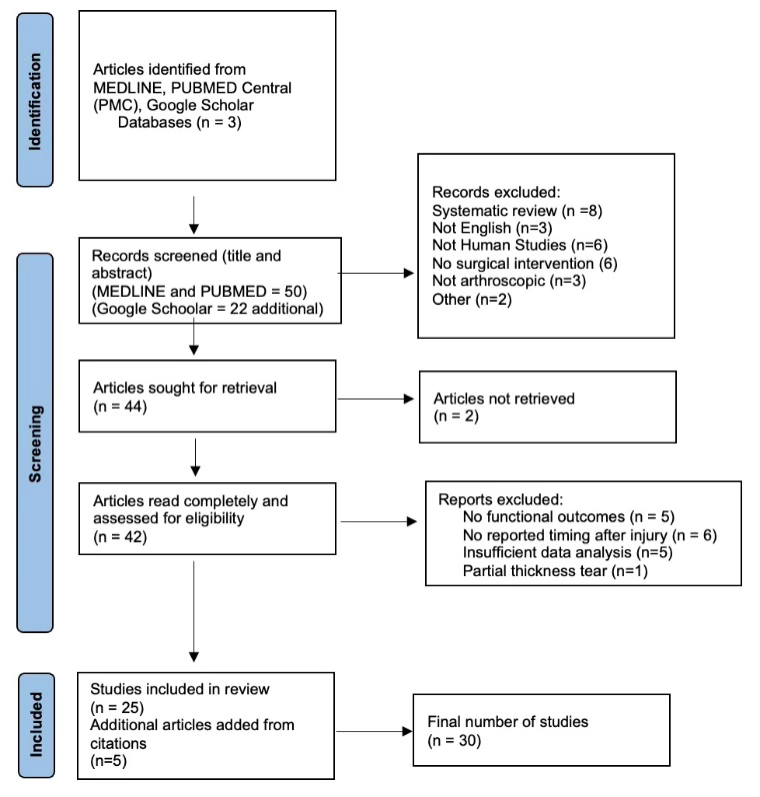
This PROSPERO-registered review (CRD42024528249) adheres to PRISMA guidelines, including randomized controlled trials, cohort, and case-control studies on adults with imaging-confirmed full-thickness rotator cuff tears. We excluded non-arthroscopic techniques and studies lacking timing data or key outcomes. Searches in MEDLINE, PubMed, and Google Scholar (August 2024) yielded 72 studies, with 30 meeting inclusion criteria. Data extraction included study design, sample size, and clinical scores (e.g., ASES). The ROBINS-I tool assessed bias, and t-tests evaluated outcome differences by age and timing, categorizing results as early-beneficial, delayed-detrimental, or neutral.
Results
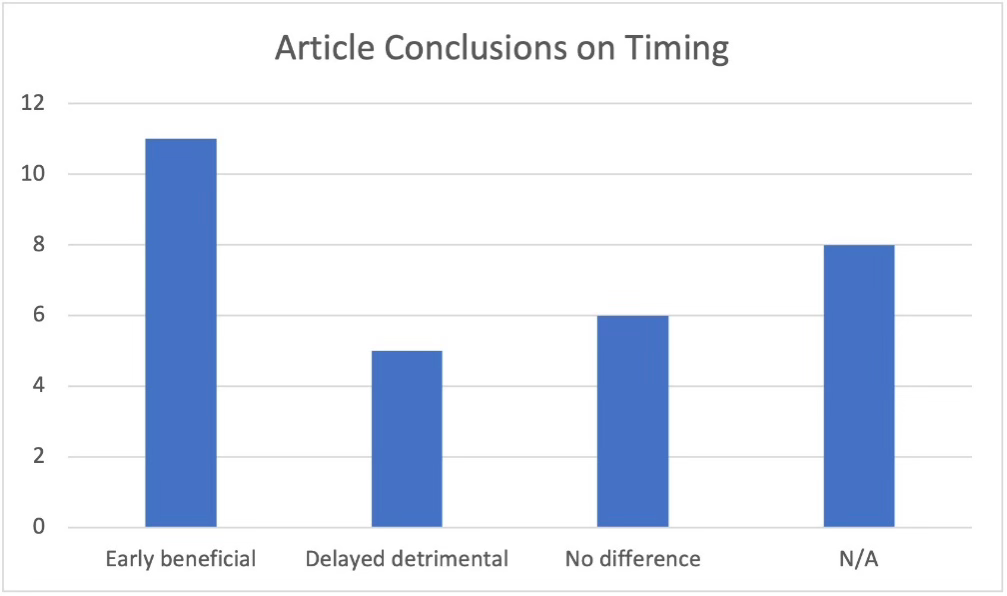
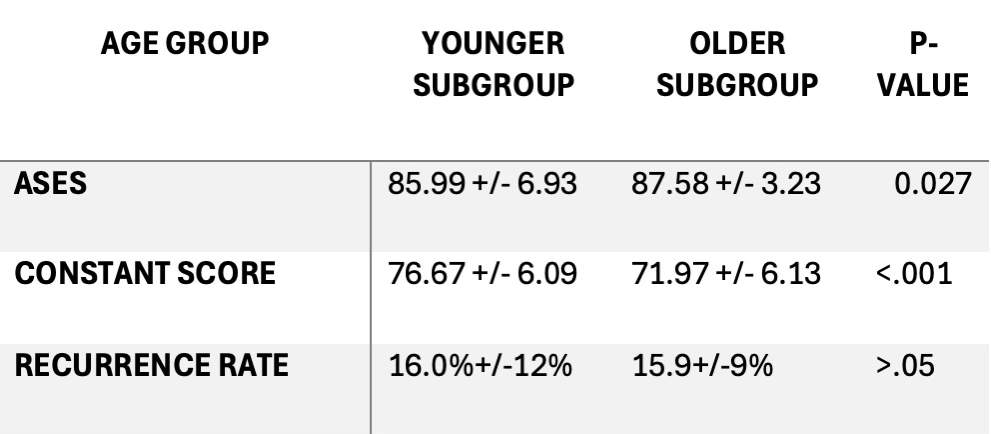
In the 30 studies reviewed, 3141 patients were divided into two age cohorts: one group under 50 years (n=360) and one group over 50. Patients in the younger cohort (<50) demonstrated significantly higher functional scores (p<.001) compared to the older group. Retear rates averaged 16% across both cohorts, with no significant difference between age groups. Four studies indicated that early intervention led to significantly greater postoperative functional improvements, supporting the potential benefits of timely surgical repair.
Conclusion
Patients under 50 experienced better functional outcomes, though age had little effect on retear rates, suggesting tear size and comorbidities play key roles in durability. Evidence on timing remains mixed, underscoring the need for personalized surgical timing and additional RCTs to clarify recovery timelines and explore psychosocial factors in patient outcomes.